Wiki

The Iron Curtain depicted as a black line.
Warsaw Pact countries on one side of the Iron Curtain appear shaded red;
NATO members on the other shaded blue; militarily neutral countries shaded gray. The black dot represents
West Berlin.
Yugoslavia, although communist-ruled, remained largely independent of the two major blocs and is shaded green.
Communist Albania broke off contacts with the
Soviet Union in the early 1960s, aligning itself with the
People's Republic of China after the
Sino-Soviet split; it appears stripe-hatched with grey.
The Iron Curtain was the name for the boundary dividing
Europe into two separate areas from the end of
World War II in 1945 until the end of the
Cold War in 1991. The term symbolizes the efforts by the
Soviet Union to block itself and its
satellite states from open contact with
the West and non-Soviet-controlled areas. On the east side of the Iron Curtain were the countries that were connected to or influenced by the Soviet Union. Separate international economic and military alliances were developed on each side of the Iron Curtain:
Member countries of the
Council for Mutual Economic Assistance and the
Warsaw Pact, with the Soviet Union as the
leading stateMember countries of the
North Atlantic Treaty Organization (NATO) and with the
United States as the pre-eminent power
Physically, the Iron Curtain took the form of border defences between the countries of Europe in the middle of the continent. The most notable border was marked by the
Berlin Wall and its
Checkpoint Charlie, which served as a symbol of the Curtain as a whole.
[1]The events that demolished the Iron Curtain
started in discontent in
Poland,
[2][3] and continued in
Hungary, the
German Democratic Republic(East Germany),
Bulgaria,
Czechoslovakia, and
Romania. Romania became the only
communist state in Europe
to overthrow its totalitarian government with violence.
[4][5]The use of the term iron curtain as a metaphor for strict separation goes back at least as far as the early 19th century. It originally referred to fireproof curtains in theaters.
[6] Although its popularity as a Cold War symbol is attributed to its use in a speech
Winston Churchill gave in
5 March 1946 in
Fulton,
Missouri,
[6] German Minister of Propaganda
Joseph Goebbels had already used the term in reference to the Soviet Union.
[7]
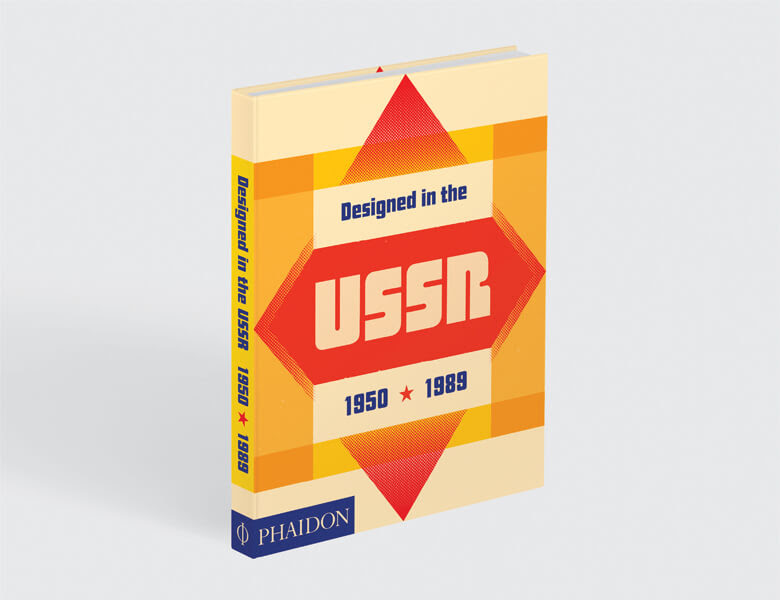
Designed in the USSR: 1950–1989 |
| |
 |
| |
| A fascinating glimpse into design behind the Iron Curtain, revealed through the products and graphics of everyday Soviet life |


