2017年10月18日 星期三

socialite

A New York socialite, deeply troubled and in denial, arrives in San Francisco to impose upon her sister. She looks a million, but isn't bringing money, peace, or love...  


Ksenia Sobchak speaks to the crowd during opposition protests in Moscow in 2012.
Russian Socialite Enters Race to Challenge President Putin

By NEIL MacFARQUHAR

Ksenia Sobchak, a TV journalist who has long paraded her glamorous life on social media, says she will be the voice of Russians without one.
socialite  1928


socialite 

Pronunciation: /ˈsəʊʃəlʌɪt/ 


NOUN

A person who is well known in fashionable society and is fond of social activities and entertainment.

Preppy (also spelled preppie) or prep, preppy fashion; Arthur Cinader,


Arthur Cinader, founder of preppy fashion powerhouse J. Crew, dies at 90 http://wapo.st/2x7aS4k
He and his daughter Emily built a pastel-colored, turtlenecked fashion empire.
WASHINGTONPOST.COM


Wiki

Preppy (also spelled preppie) or prep (all abbreviations of the word preparatory) refers to a subculture in the United States associated with the old private Northeastern university-preparatory schools. The terms are used to denote a person seen as characteristic of a student or alumnus of these schools. Prep has become a colloquialism in the United States and has largely replaced preppy in modern usage. Characteristics of preps in the past, include a particular subcultural speech, vocabulary, dress, mannerisms, etiquette, reflective of an upper-class upbringing.[1]

Definition[edit]

The term preppy derives from the private, university-preparatory or prep schools that some American upper classand upper-middle-class children attend.[2] The term preppy is commonly associated with the Ivy League and oldest universities in the Northeast and the prep schools which fed students to them,[3] since traditionally a primary goal in attending a prep school was admittance into one of these institutions.[2] Preppy fashion derives from the fashions of these old Northeastern colleges in the early to mid-twentieth century. Lisa Birnbach's 1980 book Official Preppy Handbook, which was written to poke fun at the rich lives of privileged Ivy League and socially elite liberal arts college students but ended up glamorizing the culture, portrays the preppy social group as well-educated, well-connected, and although exclusive, courteous to other social groups without fostering serious relationships with them. Being well-educated and well-connected is associated with an upper-class socioeconomic status that emphasizes higher education and high-income professional success.[3]

Fashion[edit]

Clint Eastwood wearing white golfing V neck sweater and racing green polo shirt with oversized collar, 1981
For men, preppy fashion has its roots in the Ivy League style of dress, which started around 1912 and became more established in the late 1950s.[4] J. Press represented the quintessential Ivy League style, stemming from the collegiate traditions of Ivy League schools. In the mid-twentieth century J. Press and Brooks Brothers both had stores on Ivy League school campuses, including HarvardPrinceton, and Yale. Preppy fashion emerged in the late 1970s with cues from the original Ivy League style. Some typical preppy styles also reflect traditional upper-class leisure activities, once associated with the wealthy English who once had a strong political and social position in the Northeast and New England, such as polosailinghuntingfencingcrew rowinglacrossegolftennisrugbysquash[3] and swimming. This association with old English inspired outdoor activities can be seen in preppy fashion, through stripes and colors, equestrian clothing, plaid shirts, field jackets, and nautical-themed accessories. By the 1980s, mass marketing of brands such as LacosteDaniel CremieuxIzod,[5] and Dooney & Bourke became associated with preppy style in many areas of the US and Canada.[citation needed]
For women, preppy-influenced fashions emerged in the 1960s, a trend led by designers such as Perry Ellis and Lilly Pulitzer, influenced by designers such as Oleg Cassini, and popularized by female students at the Seven Sisters Colleges, sister institutions to the Ivy League.[6] These classic ensembles of the 1960s and 1970s include tailored skirt suits, low heels, wrap dresses, shift dresses, silk or cotton blouses, and jewelry with a refined style. Such clothing often includes elements drawn from typical preppy style, such as nautical stripes, pastel colours, or equestrian details.
Though traditional interest in preppy style fell in the 1990s,[according to whom?], some of the newer outfitters such as Ralph LaurenJ. CrewVineyard VinesGant and Elizabeth McKay are perceived as having preppy styles, with designers such as Marc Jacobs and Luella Bartley adding the preppy style into their clothes in the 1990s.[7]
Examples of preppy attire include argyle sweaters, crewneck sweaters, grosgrain or woven leather belts, chinos,[3] madras,[1] Nantucket Reds,[1] button down[3] Oxford cloth shirts,[5] pearl necklaces and earrings, gold bangle or large chain bracelets, penny loafers, polo shirts (often with a popped collar), and boat shoes.[1]

2017年10月17日 星期二

AIDS, flash mob,

“A little giving goes a long way” (or some variation thereof) is a painfully hackneyed proverb. But as one young girl in Sabadell recently demonstrated, there just might be some truth to it. Check out this sweet flash mob play a bit of Beethoven's 9th.
It's a pretty perfect demonstration of a little going a long way.
WWW.WQXR.ORG
Opera is almost naive in the way it magnifies and crystallizes emotions. That is the real meaning of the ‘grand’ in grand opera. But music can go even a step further: it can render words almost unnecessary. This is the highest estate that opera can reach, where the music is so communicative that the merest general knowledge of the dramatic action is enough to give you the key to a rich enjoyment of the work.
Leonard Bernstein
What Makes Opera Grand? 1958
Read more: https://leonardbernstein.com/…/omnib…/what-makes-opera-grand
We invite you to experience this 2013 TEDxRiodelaPlata flashmob performance of Libiamo ne' lieti calici" from Verdi’s La Traviata. 
https://www.youtube.com/watch?v=mrEk06XXaAw


flash mob (or flashmob)[1] is a group of people who assemble suddenly in a public place, perform an unusual and seemingly pointless act for a brief time, then quickly disperse, often for the purposes of entertainment, satire, and artistic expression.[2][3][4] Flash mobs are organized via telecommunicationssocial media, or viral emails.


First flash mob


Flash mobbing was quickly imitated outside of the United States. This picture is of "sydmob", the first flashmob held in Sydney, Australia

The first flash mobs were created in Manhattan in 2003, by Bill Wasik, senior editor of Harper's Magazine.[7][9][16] The first attempt was unsuccessful after the targeted retail store was tipped off about the plan for people to gather.[17]


美國在台協會 AIT

12月1日是世界愛滋病日。全世界共有3,670萬人感染愛滋病毒(HIV/AIDS)。當前的目標是到2030年根除愛滋病。我們雖已有長足的進步,但是這個數字還是非常高,請與我們一起努力根除此疾病。你可以加入由美國總統愛滋病救援緊急計劃(U.S. President’s Emergency Plan for AIDS Relief)贊助的線上快閃族表達你的支持: https://goo.gl/W72xY4。了解更多: https://goo.gl/F0R7SJ


Today (December 1) is World AIDS Day. 36.7 million people live with HIV/AIDS. The goal is to reduce that number to zero by 2030. We’ve made a lot of progress, but 36.7 million is still too high a number. You can show your support by joining an online flash mob, sponsored by the U.S. President’s Emergency Plan for AIDS Relief (PEPFAR).https://goo.gl/F0R7SJ

2017年10月15日 星期日

enema

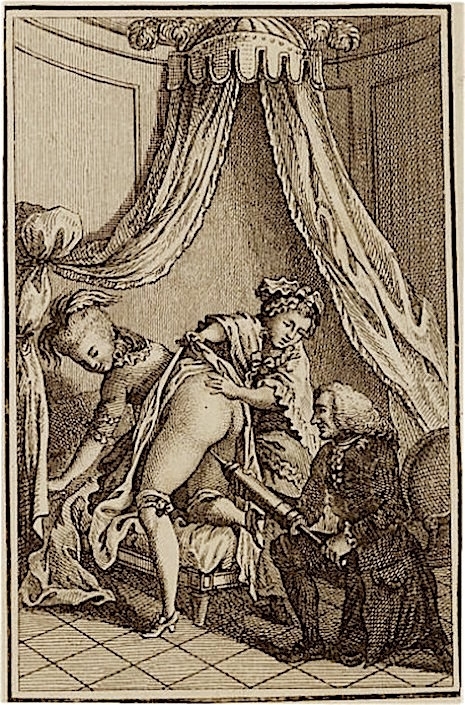
The erotic art of the enema
(NSFW-ish)
From the DM archives.
Mel Brooks was once on Michael Parkinson’s chat show sometime in the early 1980s where he described the opening scenes to his proposed next movie. Brooks explained he wanted his film to begin like Stanley Kubrick’s 2001: A…
DANGEROUSMINDS.NET


THE EROTIC ART OF THE ENEMA
12.20.2016
12:32 pm
Topics:
Tags:
A1010Le4.jpg
 
Mel Brooks was once on Michael Parkinson’s chat show sometime in the early 1980s where he described the opening scenes to his proposed next movie. Brooks explained he wanted his film to begin like Stanley Kubrick’s 2001: A Space Odyssey—but instead of apes he wanted to show a neanderthal standing upright for the first time. His spiel went something like this—I’m gonna paraphrase so deal with it:
It’s early morning—just before dawn. The sun is slowly igniting the horizon. A band of gold appears as the theme from Thus Sprach Zarathustra begins to play under the picture. As the sun rises a group of neanderthals huddle together fearfully watching this magical giant disc rising up like a god. As the music swells a beam of pure golden light radiates across the landscape.
FROM OUR PARTNERS AT VICE
 
The neanderthals are scared and cower away form this approaching light—all except one who climbs on all fours towards the top of the mountain. As this inquisitive figure moves forward the sun rises. The sky is now fire bright.
The golden orb continues to rise—the neanderthal reaches out to grasp it. He begins to rise up on two legs. First one then the other arm reach out towards the sky. As the music reaches its dramatic climax—the neanderthal is standing teetering on tiptoe arms raised. The neanderthal looks up at the sun. Then slowly at his arms—at his hands—then down at his feet. He has risen up like the sun and now stands upright for the very first time. This creature has liberated his arms to create, to produce and to help him shape a new world. His fellow neanderthals scurry away in fear. As a new day begins the first homo erectus looks at his hands—mesmerized by his fingers, by their potential to grip and move, to adapt and change. He lowers his arms and looks down at them contemplating his new power and the potential now opened to him. The music finishes as this first proto-human looks down considering the significance of his actions. It’s a powerful moment in human evolution. He looks again at his hands—he’s free to use them to help others—to change the world.
And that’s when he starts masturbating.
Human evolution—the progression towards self-gratification.
Which brings us—in roundabout fashion—to these historic and seemingly erotic images depicting the use of the enema in medicine and sex. What begins as a series of etchings often satirically showing women and men seeking much-needed relief for their “night soil” evolves into more recent imagery where the enema is used primarily for sexual gratification. It is apparent that humanity has an unbridled ingenuity for finding gratification from almost anything—vegetables, furniture, house hold appliances and even medicinal treatments.
The drawings and paintings from the twentieth century were produced by various artists who made small change producing illustrations for various editions of erotica. Some names are aliases—most notably Julie Delcourt who may or may not be the pseudonym for Richard Hegemann—a German artist who also worked under the names A. Hegemann, A. Hegener and P. Rollmann. Hegemann excelled in depicting matronly women thrashing supplicant men and badly behaved boys and girls in sailor suits who seemingly relished the whack of their teacher’s belt. Many of Julie Delcourt’s other paintings (not included here) are decidedly NSFW and rather questionable.
An individual who derives pleasure from receiving enemas is called a klismaphiliac.  The term klismaphilia was only coined fairly recently by Dr. Joanne Denko in 1973—which tends to make it seem as if klismaphiliac is only a modern practice. But as can be seen by these illustrations from the the 18th century and more recently the 1920s and 1930s—klismaphilia has a much longer history. 
 
English
醫學的灌腸enema)是指通過肛門引液體灌洗直腸的操作。有治療疾病(例如便秘)、另類保健療法、或者色情(例如性虐待)的用途。
使用的器具及液體必須為醫用,否則很容易引發危險。除不潔器具導致的感染外,操作不當還可能引起腸穿孔、過量液體吸收而引起的心力衰竭電解質失衡等[1]

bocce

"Not knowing your dialect is a serious crime." (via BBC Travel)
In the bars of small-town Italy, ageing bocce players are keeping the country's local dialects alive.
BBC.COM

硬地滾球(Boccia)是一種結合了草地滾球室內短墊滾球(Short mat bowls)而成的球類運動,並演變為地板滾球適合較嚴重的肢體殘疾人士參加;另外這項運動亦適合年紀較大的小朋友和長者參與以訓練手部的活動能力。

2017年10月9日 星期一

“acqui-hire”


Why Google Just "bought" 2000 Employees for more than a Billion Dollars
Lost in all the hype surrounding Apple's release of the iPhone 8 and X, Alphabet (Google) recently announced its $1.1 billion “acqui-hire” of the ...


Acqui-hiring or Acq-hiring (a portmanteau of "acquisition" and "hiring") or a talent acquisition, is the process of acquiring a company to recruit its employees, without necessarily showing an interest in its current products and services—or their continued operation.

Acqui-hiring - Wikipedia

https://en.wikipedia.org/wiki/Acqui-hiring

2017年10月4日 星期三

Sinophone

Society for Cinema and Media Studies (SCMS) & Association for Asian Studies, Inc. (AAS) members, please check out the latest review of University of Alberta Professor Christopher Lupke's book, "The Sinophone Cinema of Hou Hsiao-hsien" by Film International, which praises it for being "a well-informed book straddling between the disciplines of Chinese Studies and Film Studies ... highly relevant to film buffs, sinophiles, film researchers, and students.” Read more at http://ow.ly/DdJj30ft7O3

Cambria Press
出版商


Sinophone
Traditional Chinese漢語圈
Simplified Chinese汉语圈
Literal meaningHan language circle
Traditional Chinese操漢語者
Simplified Chinese操汉语者
Literal meaningHan language-speaking person(s)

Sinophone's etymology is from Sino- "China; Chinese" (cf. Sinology) and -phone "speaker of a certain language" (cf. Arabophone).
Edward McDonald (2011) claimed the word sinophone, "seems to have been coined separately and simultaneously on both sides of the Pacific" in 2005, by Geremie Barmé (Australia National University) and Shu-Mei Shih (UCLA). Barmé (2008) explained the "Sinophone world" as "one consisting of the individuals and communities who use one or another—or, indeed, a number—of China-originated languages and dialects to make meaning of and for the world, be it through speaking, reading, writing or via an engagement with various electronic media."